
Airtightness Testing: Building Preparation

Course Description
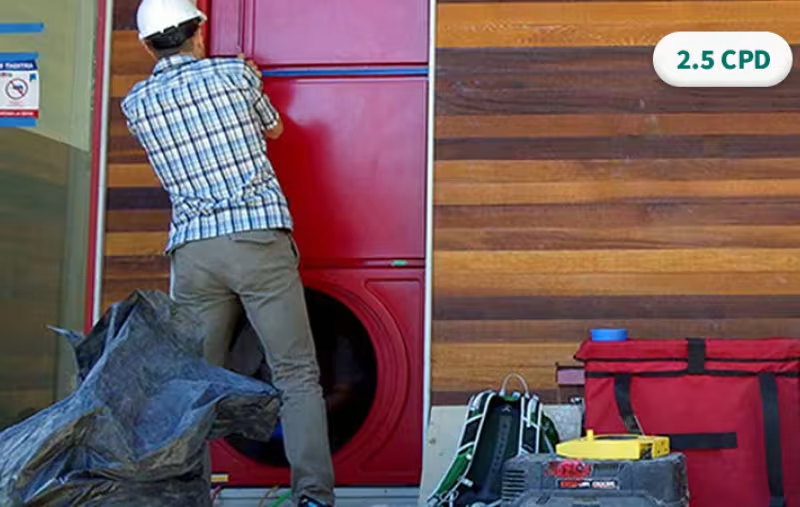
Why do we need to prepare a building for airtightness testing? What does this involve? Are there any tips?Potential heat loss due to air leakage through an enclosure with moderate or poor airtightness has a significant and measurable impact on the required heating energy for a building. An enclosure that has good or exceptional airtightness can provide significant energy savings.
Building codes require that building enclosures include continuous air barriers; the integrity of these air barriers can only be measured with an airtightness test. Airtightness testing is typically carried out using blower fans to pressurize and depressurize the building to measure the overall building airtightness. This video applies to both Part 3 and Part 9 buildings, and will be of interest to builders, developers, designers, energy advisors, and building officials.
Presenters

Einar Halbig, BASc., CEA
Einar Halbig - Einar is a Principal at E3 Eco Group. Trained as a civil engineer and working as an Energy Advisor, he has evaluated over 2,000 existing homes and hundreds of new homes. Einar provides Building Science for New Homes training and Certified Energy Advisor training. He also serves as Chair of the CHBA BC Technical Advisory Committee.

James Higgins, AScT
James Higgins is a designer and educator with 10 years experience working with new construction and existing buildings, conducting research and testing, and developing training and publications in BC.

Stephen Wong, EIT
Stephen Wong is a Building Science Consultant at Morrison Hershfield, working on building envelope design, energy modeling, and thermal performance analysis.